25
Reasons Why Yoga, Speech and Language Go Together
By
Christine Ristuccia, M.S. CCC-SLP, RYT and James Ristuccia RYT
Yoga
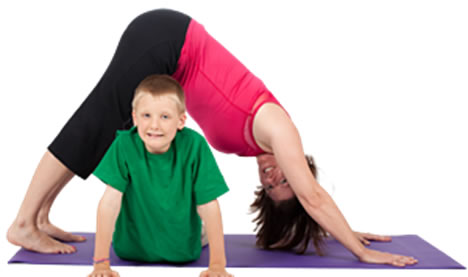
is a wonderful medium that combines physically calming exercises while opening a
channel for better learning and retention. A centuries-old practice, yoga is
increasingly being recognized and popularized for its health benefits. Less
established are the significant benefits for mental health and the
concomitant impact on learning. Yogic practice not only strengthens and flexes
our bodies; it uplifts our mood, reinforces natural kinetic learning, brings
clarity to make better decisions, and increases language reception and
retention. This ideal combination leads to calmer and smarter kids.
Yogic
techniques, specifically the purposeful breathing aligned with physical
movement, are simple and easy to implement in an educational setting to better
achieve educational goals. Bringing yoga into school does not need to entail a
complete, hour-long class adults typically attend. Nor should it be one more
thing to add to our ever-expanding to-do list of never-to-get-done items. Rather
yoga is a tool to be used during transitions, breaks or as facilitators of
active learning to enrich and enhance the overall learning experience. Yoga is
inexpensive and easy to learn. As educators, we need to be attuned to new ideas
and methods that can benefit our children. Here are 25 reasons to consider using
yoga in your clinic or school:
- Yogic
techniques, with real benefits, can be accomplished in as little as one
minute.
- Yogic
breathing promotes self-control including impulse control and behavior
stability.
- Yoga
emphasizes good health and fitness, which sets children up for a lifetime of
healthy living.
- Yoga
is totally inclusive. Everyone participates all of the time—there are no
choosing sides, sitting on the sidelines or waiting for a turn.
- As
kinetic movement, yoga can aid in developing decoding skills,
fluency, vocabulary, syntactic knowledge, discourse knowledge and
metacognition.[i]
- Yoga,
as a teaching medium through movement, gives children a context for
listening and meaningful language production.
- Yoga
improves fine and gross motor coordination.
- Since
there is an established link between fine and gross motor delay and
linguistic ability improving motor skills, through an activity such as yoga,
you can positively impact concomitant development of both motor and
language-linguistic skills.[ii]
[iii]
- Yoga
is motivating because it is non-competitive, without public displays of
skill (i.e., hitting a baseball) and achievement is individualized, thus
leading to increased confidence and social acceptance. Children who are shy,
lack in social skills and are perhaps frustrated with competitive sports
because their motor skills are not on par with peers may benefit the most.
- By
using the body as a kinesthetic medium, yoga facilitates learning spatial
and oppositional concepts, such as under/over, left/right, below/above, etc.
- The
parasympathetic nervous system, which is essential to relaxing, de-stressing
and good health, is activated by yogic movement and breathing.
- Yoga
teaches students the tools to “turn off” our hyper-connected,
hyperactive world and fortify themselves from the constant bombardment of an
over-scheduled, over-tested, and media-manic lifestyle.
- Yoga
fosters mental discipline, which results in an uplifted and positive mental
outlook.
- Knowledge,
processed and stored temporarily in the hippocampus (with limited space), is
re-filed by the brain during rest periods into longer-term storage areas.
Yoga aids in retention by allowing deep rest periods that can allow for this
integration.
- Yoga
is tactile/kinesthetic learning; the most basic child-centric learning
style.
- Yoga
will make your students more attentive and ready to learn. As a quick
energizer, even one yoga pose done with purposeful breathing for just one
minute will oxygenate the blood and lift the energy level of your
students.
- The
bodily movements that yoga engages lends itself to stimulating
conversational interaction that touch on a host of language-linguistic
goals. “Where is your left
foot?,” flexes body parts, spatial concepts and interrogatory responses.
“Place your feet parallel on the mat,” includes math, vocabulary, body
part and following directions.
- Yoga
is anti-sedentary. It is the antidote to sitting at a desk. Many children,
especially those with sensory integration issues, cannot sit still. It’s
not a behavior or compliance issue; it’s that his or her body needs to
move to make sense of environmental stimulus. Yogic movements are a great
way to channel natural sensory-motor energy into a positive activity.
- Yoga
is one of the best activities for grounding and centering children. Grounded
children are ready to learn with less behavior problems. Children that are
nervous, anxious, aggressive, fearful or socially-challenged may especially
benefit from yoga.
- The
cerebellum coordinates both sensory movement and processes language
cognition. This intersection is where movement (yoga) harmonizes with
language acquisition and retention.
- Just
being in a state of more awareness (focus), attained during yogic exercises,
stimulates brain activity and thus reception.
- Being
an ancient practice, specific yogic movements have been refined over time
toward known positive affects on a range of emotions, including improving
creativity, compassion, tolerance, communication and reasoning.
- Physically
acting out stories using yoga movements (children especially like all the
animal possibilities: cat, cow, dog, elephant, etc.) provide students with a
variety of contextualized and scaffolded activities that gradually involve
more oral language and active participation that are non-threatening and a
lot of fun.[iv]
- Yoga
keeps the nervous system elastic and capable of bearing stress.
- Bodily
awareness is increased when one does yogic exercises, improving posture and
breathing which are essential foundations for oral speech.
[iii] Sommers, R. K. (1988).
Prediction of fine motor skills of children having language and speech
disorders. Perceptual & Motor Skills, 67, 63-72.
[iv] Reig, S. A. and Paquette,
K. R. (2009). Using drama and movement to enhance English language
learners’ literacy development. Journal of Instructional Psychology. Retrieved January 22, 2010 from HighBeam Research: http://www.highbeam.com/doc/1G1-88248041.html
Christine Ristuccia is the founder and president of Say It Right™.
(www.sayitright.org) and the
author of many books including the award winning /r/ remediation program The
Entire World of R™.
She is a certified yoga instructor with over 500 hours of
training.
Jim
Ristuccia is the chief operating officer of Say It Right, an educator and a certified yoga instructor.
|